What happens when you mark an email as spam?
Protecting against spam is more important than you might think. Not least because the actual volume of malicious emails sent daily is scary — around 160 billion according to a report by Email tool tester.
Plus, you now have AI that can mimic someone’s style and voice at the push of a button, meaning scammers can be more convincing than ever. All this means understanding exactly how to protect against spam, and maintaining email security is crucial.
Luckily, there are a few easy-to-implement changes that can help. Read on to find out.
Brief definition of “spam”
First things first, let’s nail down exactly what spam is. This is important because it’s a term that’s often overused to describe any email that clogs up your inbox. You might be wondering — does spam stand for something? The term “spam” actually comes from the canned meat brand, popularized by a Monty Python sketch where the word was repeated endlessly.
Today, the term refers to any unwanted or unsolicited emails sent in bulk to a large list of recipients who didn’t sign up for that particular list. They could be advertisements for questionable goods, phishing attempts, or attempts to deliver malware, but the unifying trait is that you didn’t ask for them.
Usually, spam is sent automatically in bulk to large numbers of recipients using automated tools, scripts, or email platforms. So, any email you agreed to receive isn’t spam, even if it clogs up your inbox.
However, that doesn’t mean these ‘non-spam’ emails don’t end up in the spam folder — more on that later.
What happens when you mark an email as spam?
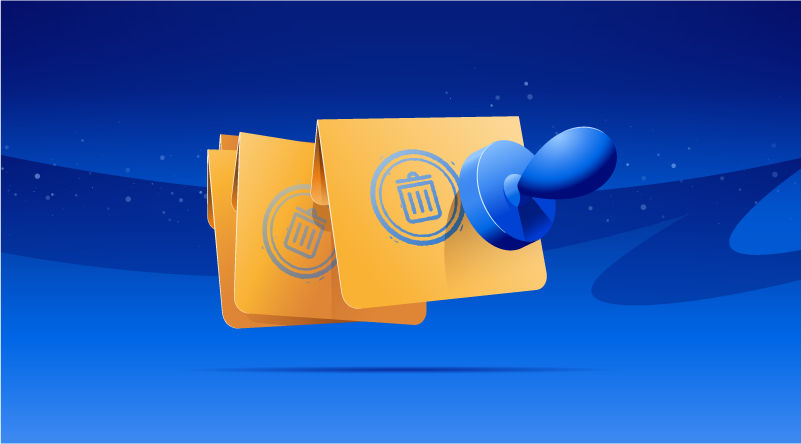
When you mark an email as spam, you’re telling your email provider that the message is unwanted, unsolicited, or suspicious. This not only moves the email to your spam folder but also helps your email provider to identify spam in the future.

Emails that are moved to the spam or junk folder
Once it’s marked as spam, the email is immediately removed from your inbox and placed in the Spam or Junk folder. This helps to isolate any harmful or unwanted messages so that they cannot wreak havoc on your inbox or computer.
Emails in the spam folder also typically have restricted functionality. Images and tracking pixels may be blocked by default, and you might see warnings about suspicious content. Most providers automatically delete emails in the spam folder after a set period, usually around 30 days, to reduce storage and security risks.
Your email provider learns your preferences
The best thing about this process is that it becomes more accurate over time. When you mark an email as spam, you’re doing two things: locally, you’re telling the system, “I don’t want this,” which helps it learn your personal preferences; and globally, you’re signaling, “Others probably won’t want this either.”
Your email provider uses this data to help the spam filter learn your preferences and improve its accuracy overall. It looks for patterns in the emails you mark as junk. The system breaks messages into smaller parts, or tokens, and compares those tokens to known spam-like content. Over time, your email provider gets better at spotting and blocking future spam.
Future emails from that sender are filtered out
Over time, your spam filter will start automatically moving emails from known spam senders to your junk folder. But it’s not instant. Your provider still relies on multiple users reporting the same or similar messages to refine its filters.
That said, most providers use constantly updated data and third-party tools to block common spam early. These include IP and domain reputation checks, link analysis, anti-malware scans, and moderation models to flag unsafe content. Still, some messages can slip through until the system learns more about newer threats. Still, some messages slip through as spammers constantly change tactics, forcing providers to keep up.
Impact on sender’s reputation (e.g., sender’s domain/IP reputation)
When enough people mark emails from the same sender as spam, it can hurt that sender’s reputation. But reputation systems consider more than just spam reports. They also factor in bounce rates, engagement (like opens, clicks, replies), and whether the sender has proper authentication in place (SPF, DKIM, DMARC).
If the sender uses a shared IP, others on the same network can be affected too. Some providers also offer feedback loops (FBLs), letting senders or ESPs see spam complaints and adjust accordingly.
If a sender’s reputation sinks low enough, their emails might face delivery issues, such as delays, diversion to spam or bulk folders, or even being blocked entirely. A delay can occur due to greylisting, in which the receiving server temporarily defers messages by returning 4xx responses to unknown or low-reputation senders. Legitimate servers usually retry, but many spammers don’t. Meanwhile, filtering into spam or bulk folders means recipients may never see the message at all.
In more severe cases, the email can be outright rejected and not delivered at all. Once a sender’s reputation is damaged, it can be hard to rebuild. Filters often apply stricter scrutiny for a while, and the sender must demonstrate consistent, reputable behavior, such as low complaint rates, high engagement, and proper authentication, before delivery returns to normal.
It’s actually a good thing that spam filtering systems take sender reputation seriously. If enough users report a sender as spam, their domain can eventually be blocklisted or flagged by reputation systems, making it much harder for them to reach anyone’s inbox.
This helps stop persistent spammers in their tracks. But on the flip side, if you accidentally mark a legitimate sender as spam, it’s worth moving their email back to your inbox. Some major providers also offer feedback loops that notify senders of spam reports if they’re properly registered and have the right headers, such as List-Unsubscribe.
If you mark an email as spam, will the sender know?
It’s normal to wonder what happens to the sender if you mark an email as spam, especially if you’re unsure whether it’s truly suspicious or just unwanted. But the question is, once you move their email to the spam folder, will they find out?
Do senders get notified when you mark an email as spam?
The straightforward answer is no. When you mark an email as spam, your email provider registers that signal, but the sender is not notified. The classification happens on the provider’s servers, not just on your device. The sender will not receive an email or notification telling them their message has been flagged.
If enough users report the sender as spam, the sender may notice a reputation drop. This could be noticeable in the long term, but again, it’s important to note that platforms like Google don’t share individual complaint data.
How email service providers track spam reports at scale
If you’ve ever sent or been involved in an email campaign, you’ll know that modern tools are incredibly accurate at tracking performance and offering insights for optimization.
This is largely thanks to something called a feedback loop. When someone clicks “Mark as spam” in their inbox, email service providers (ESPs) use this system to monitor and track which sender or campaign triggered the complaint. That data often feeds into tools like Google Postmaster, which provides reports on how a campaign is performing, how people are interacting with the emails, and whether the sender’s IP address or domain has a good reputation.
If you’re the sender, your ESP will typically try to help by scanning for issues like high bounce rates, spam trap hits (these are special email addresses used to catch bad senders), or blacklisting by anti-spam groups.
Spam traps work like canary traps; sending to one can signal poor list hygiene or that the address was purchased or scraped. Some traps are pristine (never meant to receive legitimate email), while others are recycled from abandoned accounts, so even outdated lists can trigger them.
If too many complaints come in or performance metrics drop, your ESP may slow down or pause your email deliveries to protect its own sending reputation and prevent further damage to your campaigns.
Best practices for managing spam
Now that you know how the process works, the next question is, how can you keep your digital identity safe?
Avoid clicking suspicious links or buttons
It’s increasingly difficult to tell real emails from spoof ones. Scammers often hide harmful links or buttons inside messages that look legitimate. It could be a phishing website asking for personal details, which are then sent directly to the scammer. Or, clicking might take you to a site that installs malware or viruses on your device.
That’s why it’s important to stay extremely vigilant with hyperlinks and buttons—even in emails that look professionally designed or use polished HTML templates. Always take a moment to question whether a link or button seems legitimate. For example, messages from banks or official organizations usually don’t contain spelling errors or typos. But with tools like ChatGPT making phishing emails look more convincing, extra caution is essential.
If you’re not expecting a link or button, don’t click on it. Be especially cautious with emails from unknown senders. Many people assume that quickly clicking a suspicious link just to “take a peek” is harmless. But in reality, these links often lead to phishing pages designed to steal your personal information.
Don’t just delete — report if necessary
When a spam email lands in your inbox, most people would do the simple thing and delete it. But before you do, it’s important to make sure you report it first. Most email providers let you mark messages as spam or phishing. As mentioned above, this process helps train your own spam filters to recognize similar threats in the future.
It’s also easy to see spam as an isolated event, targeted just at you. But most of the time, these attacks are part of a larger operation targeting hundreds, if not thousands, of people.
This is where the report function becomes so important.
Not only does it alert your email provider to the threat so they can block the sender, but it also allows their cybersecurity teams to jump in, disabling malicious links or taking down phishing websites.
By reporting it, you contribute to the early detection of widespread threats. Your single report might help protect thousands of others from falling for a scam. If the threat is serious enough, your report could even help legal authorities track down and take action against the scammers.
Unsubscribe vs. mark as spam
For most people, email is part of daily life. With the sheer volume piling up in our inboxes, it can get overwhelming. But even though deleting may seem like the obvious choice, it’s important to understand the difference between unsubscribing from an annoying sender and marking an email as spam:
- Unsubscribe – use this when the sender is legitimate, but you no longer want their emails. This tells the sender to stop contacting you and helps keep your inbox tidy.
- Mark as Spam – use this when the email is unwanted or suspicious. This flags the message for your email provider and helps block similar attempts in the future.
Use filters or rules to control your inbox
Two powerful tools for controlling your inbox are filters and rules. These tell your email provider exactly what kind of content you don’t want and where you want it to go, whether that’s a dedicated folder, the trash, or straight to spam. Filters will improve automatically the more emails you mark as spam, but you can also set up your own rules to help out.
This might mean sending emails from unknown senders to a separate folder or directing newsletters you rarely read into a “Later” folder. Most email providers let you create these rules in settings under options like “Filters,” “Rules,” or “Mail Settings.”
Some platforms also let users create advanced anti-spam rules, such as blocklists and acceptlists, based on specific conditions like sender address, domain, subject line, or message content. These give you even more control over what gets through and what gets filtered out.
You can also guide your email provider by adding certain words or phrases to your custom filters. If the spam you’re receiving often includes phrases like “urgent response needed” or “get rich quick,” you can create rules to catch those messages and flag or delete them automatically without ever seeing them in your inbox.
How to mark an email as spam (Step-by-step overview)
Getting rid of spam is easy once you know how, and thankfully, most ESPs make this process pretty simple. There are usually small differences among email clients, but in general, they all follow a similar process. Below, we’ll break down how to mark an email as spam in some of the major email providers.
Gmail
- Open the email.
- Choose Report Spam in the three-dot menu or use the Report spam icon in the top toolbar.
- If prompted, you can also choose to unsubscribe or report the email.
Outlook (Web and Desktop)
- Open the email.
In the toolbar above the message, choose Report junk. - Or tap Report phishing if the message seems suspicious.
Apple Mail (macOS/iOS)
- Open the email.
- Tap or click the flag icon, or use the Move to junk button in the top toolbar.
- Alternatively, right-click the message and choose Move to junk.
Namecheap Private Email
- Log in to your PrivateEmail webmail.
- Open the email you want to report.
- Tap the Mark as spam button in the top toolbar.
- Alternatively, right-click the message and select Mark as spam.
When it’s appropriate to mark emails as spam
Emails that require you to unsubscribe can be annoying, but they’re not usually harmful. Spam, on the other hand, is a different story. A potentially dangerous email sitting in your inbox can leave your data exposed and could even compromise your entire computer.
That’s why it’s a good idea to have a mental checklist of scenarios where it makes sense to hit the spam button.
Below, we’ve listed a few common red flags to help you decide when to mark an email as spam.
Example scenarios
- Unknown sender — comes from a sender you didn’t knowingly subscribe to, especially if the unsubscribe link doesn’t work. In this case, mark it as spam.
- Phishing attempt — a scam that tries to trick you into giving personal information like passwords, etc. Report it as spam or phishing immediately, and don’t click on anything inside.
- Suspicious attachments or links — the message contains files like .exe, .zip, or .scr, or includes links to file-sharing platforms. Mark these as spam and delete them.
- Spammy marketing campaign — you’re receiving repeated low-quality emails from different domains. This is a clear sign of spam. Mark it to train your email filter.
- Bulk email with no relevance — you’re included in a mass email that has no clear relevance to you. This could be a sign of email harvesting. Mark it as spam.
- Legit sender ends up in spam — a newsletter you signed up for ends up in your spam folder by mistake. If this happens, mark the email as “Not spam”.
Next steps for spam protection
A big part of managing spam is staying organized. It’s important to stay on top of what’s coming into your inbox and, when something malicious shows up, take the right action.
It’s also a no-brainer to use an email client with strong spam protection, so it’s worth doing a bit of research to find the best option for your needs.
Frequently Asked Questions
What happens when you mark an email as spam?
Two things. The email moves out of your inbox and into the spam folder, and your email provider logs it as a signal to help catch similar messages in the future. The more people report the same sender, the better the filter gets at stopping them.
If I mark an email as spam, what happens to the sender?
If enough people report them, their sending reputation will take a hit, making it harder for their emails to reach anyone’s inbox over time. But they won’t get a notification. The classification happens quietly on your provider’s servers, and the sender has no way of knowing you flagged it.
How do you mark an email as spam?
It varies slightly depending on your email client, but the process is usually similar. Open your email client, look for a “Report spam,” “Mark as junk,” or “Report phishing” option in the toolbar or right-click menu, and select it. Most major providers, including Gmail, Outlook, and Apple Mail, all have this built in.
What does “email marked as spam” mean?
It means the message has been flagged as unwanted or suspicious, either by you or automatically by your email filter. Once marked, it gets moved to the spam folder.
Does spam stand for something?
No, the term comes from the canned meat brand and was made famous by a Monty Python sketch in which the word “spam” was repeated over and over. This was then adopted by savvy internet users to describe unwanted email that arrived in bulk.
Can I recover an email marked as spam?
Yes. Go to your spam or junk folder, find the email, and mark it as “Not spam”. This moves the email back to your inbox and tells your provider to trust future emails from this sender.