

The connection between newsletter growth and organic search traffic
High organic search traffic to pages that host your newsletter’s sign-up form means more people see your form, and that means more subscribers.
Likewise, consistent newsletter efforts help you stay top of mind with your audience. When they have a problem and they search for solutions online, they are more likely to choose you over other competitors.
In this article, we’ll discuss more about the connection between newsletter growth and organic search traffic, and how to grow both.
How organic search traffic affects your newsletter list
Organic traffic comes from people actively searching for answers. They land on your site with a specific need already in mind, read your content, and if it delivers, they want more.
Here’s how that affects your newsletter:
Search visitors are already primed to subscribe
People come to your website either to read a blog post, download material, or use a tool. At that stage, they’re already getting familiar with your services and products, building trust in whatever you have to offer.
If you put your sign-up form on the pages they already visit, they’re more likely to opt in.
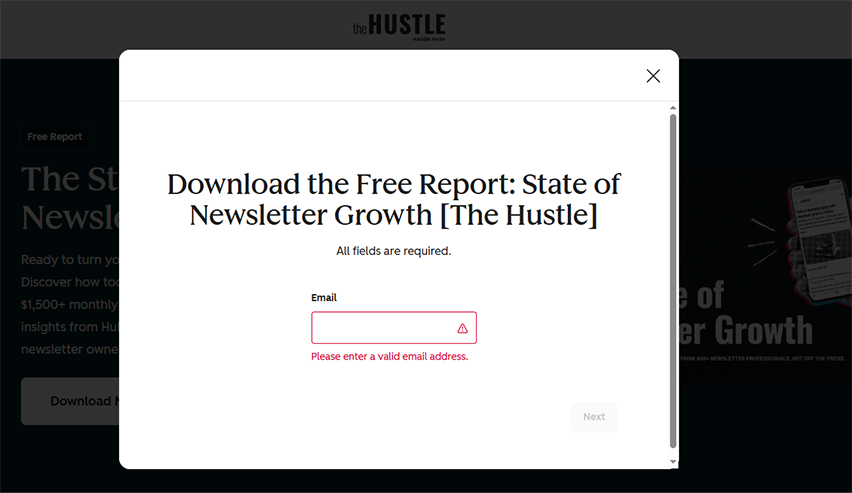
You can take it a step further by using your newsletter sign-up form to gate valuable resources. Since these people already trust you, they will hesitate less about dropping their email in exchange for what you have to offer.
See how HubSpot did that below:
SEO content puts your sign-up form in front of the right audience
The traditional way to grow your newsletter is to share it on social media and run paid ads. Cold email also helps you achieve similar results. But while all these methods work, organic search does the job much more easily.
The more optimized your web pages are, the more they show up in search engine results for the right queries and the right audience. And if you embed your email sign-up form on these pages, it too receives similar exposure.
So, let’s say one of your marketing guides, which hosts a sign-up form, receives up to 1,000 visits each month. That’s ideally 1000 new subscribers if all the visits convert.
Indexed newsletter archives attract new subscribers
Each newsletter has a web version which your readers can access online. So long as the archives are indexable and the email body is optimized with the necessary keywords to some extent, your audience can search for it.
An example is Failory’s newsletter.
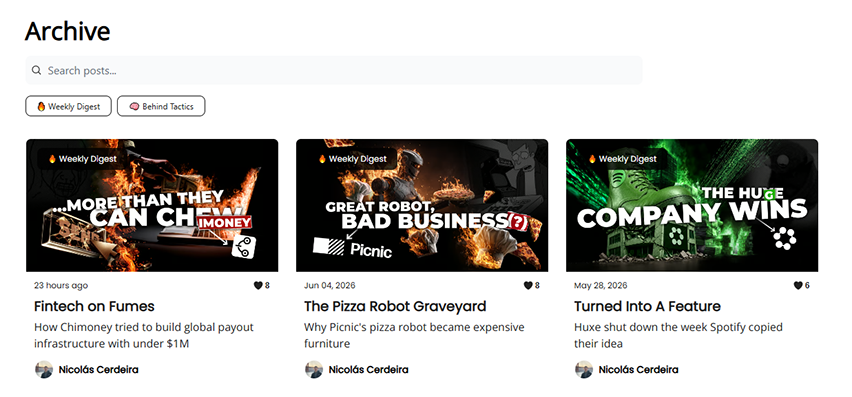
Visitors can choose any web version of the email to read. Failory also uses a mid-content pop-up to prompt new subscriptions.
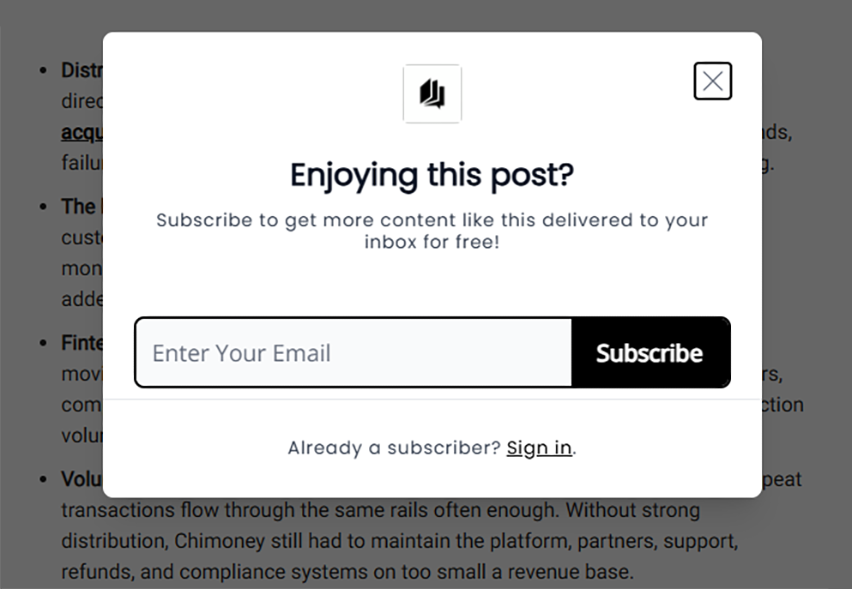
It is not a particularly conventional list-building approach through organic search, but archives provide a backup for your newsletter and ensure your audience can access them or tune in when necessary.
How newsletters benefit your organic search traffic
Just as organic traffic helps build your list, newsletters also contribute to traffic growth. Here’s how:
Subscribers share content and generate backlinks
Subscribers who read your newsletter on the web and find it helpful can easily share it with their own audiences. That further increases your web archive’s reach.
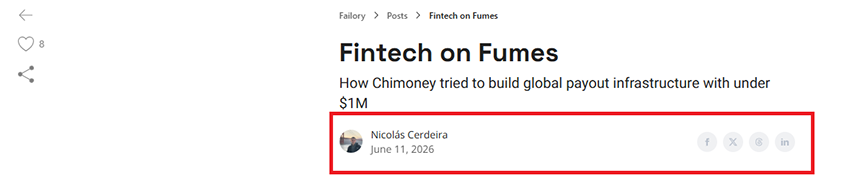
And if those audiences are web owners, writers, business leaders, or content marketers, they are likely to reference it in their own content and link back to you.
That’s exactly what we did with Failory’s web archive in this guide. In return, Failory gains a backlink. Each quality backlink increases your site’s link authority and increases your chances of ranking higher on SERPs.
It’s important to note that not every subscriber will read your newsletter on the web. Most do that inside their email app. And that’s where behavioral signal benefit comes in.
Return visitors improve your behavioral signals
Newsletters often contain links to products, resources, or services on your website. For example, David Broderick’s newsletter links to JoinTofu.
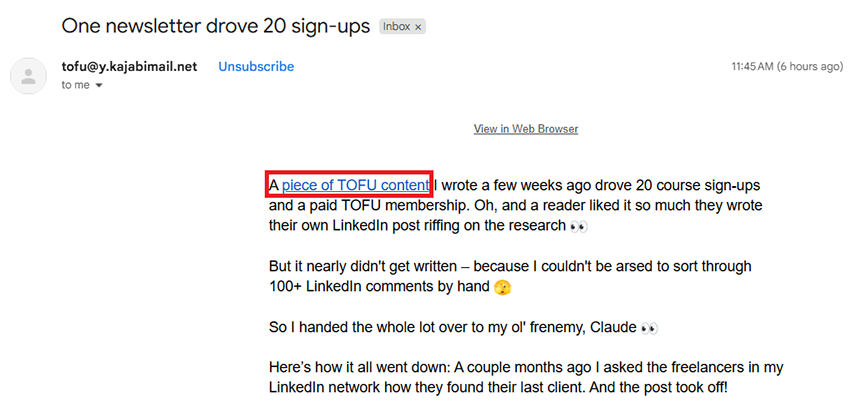
Every time a subscriber reads your newsletter, they might take an action, such as clicking a hyperlink or CTA, which redirects them to your website. Once they land on your website, search engines record it as a session.
Each session is measured by metrics such as bounce rate, dwell time, click behavior, and so on. While Google has never publicly admitted to using these signals in its ranking system, a 2024 API documentation leak suggests that might be the case.
According to the document, the search engine’s Navboost and Glue algorithm uses “goodClicks,” “badClicks,” and “lastLongestClicks,” alongside other factors in determining ranking.
Of course, these signals do not substitute for quality content or other publicly accepted ranking criteria. However, this shows that each visit from every email newsletter to your website might contribute to how your pages rank over time.
Branded searches go up as your list grows
Each newsletter you send out imprints your brand name on your subscribers’ minds. So, when they need something you offer, instead of searching a generic keyword, they search your name directly.
That is branded search. Another thing to note is that subscribers who are more familiar with your brand are more likely to mention or recommend it on platforms they spend time on, like Reddit, Quora, or Substack.
According to a recent analysis of 75,000+ websites, brand search volume, branded web mentions, and branded anchors, along with backlinks and DR, correlate with the appearance in AI search overviews to varying degrees.
You can track how well those signals are working for your brand using an AI brand visibility tool.

4 ways to get the most benefit out of both channels
Newsletters and organic search traffic are central to your brand marketing together. But if you want the best results from them, here’s what to do:
Use newsletter data to refine your content strategy
The analytic report for every newsletter tells you whether you’ve addressed your subscribers’ pain points and done so in the right way. So, if an email generates a 50% higher open rate, CTR, or conversion rate than usual, it must be a topic your audience wants to hear about.
- Analyze the successful newsletter
- See what drove more attention and curiosity
- Use the insight to refine your content strategy
You can repurpose the performing email into clusters of blog posts, social media pieces, videos using a video editor, or even captions for your paid ads. Clideo is a handy option here, letting you trim, merge, and resize videos right in your browser.
Likewise, if you have viral posts on your website, break them down to see what’s drawing clicks and repurpose them or create an excerpt of them inside your next newsletter.
Point your newsletter archive to your own domain
Newsletter platforms like Beehiiv and Substack publish web versions of your newsletter by default on their own subdomain. If they are set to noindex via the noindex tag or in robot.txt, those versions won’t appear in search results, even if well-optimized.
Secondly, even if they show up, the traffic goes to these platforms, not yours. Avoid that by pointing the newsletter archive to your own custom domain.
- On Beehiiv, go to Settings > Publication > Custom Domain and add your domain there
- On Substack, the option is under Settings > Custom Domain
- Once connected, update your DNS records in Namecheap by adding a CNAME record that points your chosen subdomain, for example newsletter.yourdomain.com, to the platform’s servers
Your archive pages then live on your domain, and each indexed issue builds authority for your site rather than theirs.
In addition, you can promote or add your newsletter’s custom domain so your audience can see it. You can include it in your social media posts, social profiles, and blog profile. People click it, see your archives, and request to join your list.
Encourage sharing and distribution
Encourage participation by asking your audience or community to share your newsletters to their network. You can do this directly inside the email itself by adding a simple line at the bottom asking readers to forward it to someone who would find it useful.
Every share puts your newsletter in front of someone who hasn’t subscribed yet. If that person clicks through to read a past issue on your archive, that is a new session on your domain.
If they subscribe, they join the pool of engaged readers who return to your site, share your content, and search for your brand by name.
Embed sign-up forms on your key traffic pages
Some pages on your website perform better or generate traffic than others. You can use SEranking to identify them and use a Heatmap to know which sections of those pages receive more attention. Those are the places you should put your sign-up forms and pop-ups.
You can also put it in your footer or mid-content inside your case studies and whitepapers. If you have valuable resources, such as special research reports or tools, you can gate them behind a form.
Get more from organic search and your newsletter together
Search and newsletters should never be used in silo.
The former directs traffic to pages that host your newsletter’s sign-up and helps you generate more leads, whereas your newsletter helps you build brand recognition.
Brand recognition drives branded search volume, resulting in higher search traffic.
To get the most out of both, use newsletter data to refine your content strategy, encourage sharing, and embed your sign-up forms on high-traffic pages.
Lastly, host your newsletter on your own domain. With Namecheap, you can easily manage the domain and DNS, and connect a custom subdomain to your newsletter platform.
Frequently asked questions
How does improving my organic search traffic actually lead to more newsletter subscribers?
When your high-value content ranks in search, more people land on pages that include your sign-up forms or gated resources, which naturally increases the number of visitors who see and complete your newsletter opt-in.
Can sending newsletters really help my website rank higher in search results?
Yes — engaged subscribers who click through from your emails become repeat visitors, share your content, and may link to it, all of which can strengthen behavioral signals and backlink profiles that support better search performance over time.
Should I host my newsletter archive on a custom domain instead of platforms like Substack or Beehiiv?
Pointing your newsletter archive to a custom domain means every indexed issue and archived email lives on your own site, helping you build domain authority and capture organic search traffic directly, rather than sending that value to third-party platforms.
When you host your website on WordPress, you can also repurpose newsletter content as blog posts, then share those posts back out through your email list, giving each piece of content a better chance to rank, be discovered in search, and drive new subscribers.





Great insights on connecting newsletter growth with organic search instead of treating them as separate marketing channels. We especially appreciate the idea of using newsletter engagement data to refine SEO content while using high-traffic pages to grow the subscriber base. When search visibility,