How to strengthen your nonprofit organization’s online presence
Imagine you run a regional nonprofit organization that helps children access quality education. You’ve completed several programs, built a network of donors and volunteers, and established an online presence.
A potential donor hears about your organization and searches for it online. They find your website and social media accounts, but the information is outdated. Your impact reports haven’t been updated, and your social pages barely reflect your recent achievements.
This can make them question whether your organization is still active and whether their contributions will make a difference.
Now imagine they find updated project reports, recent photos, measurable results, and regular communication showing how donations support your programs. They have more reasons to trust your organization and continue supporting its work.
That’s why you need to strengthen your online presence. In this article, we’ll discuss how.
Why your nonprofit needs a strong online presence
A professional online presence ensures the right people can find your nonprofit foundation and understand what it stands for. That’s non-negotiable because:
- It builds credibility and trust: A professional online presence lets people learn about your organization, see the results of your work, and understand how their support makes a difference
- Attract more donors and partners: When people can easily find your nonprofit and understand its mission, they’re more likely to support your programs, volunteer, or partner with you
- Helps you reach the beneficiaries you’re trying to serve: Sharing accurate information about your programs and services helps the people who need your support find out how to access it
In a nutshell, the more visible you are, the faster you can connect with donors, volunteers, beneficiaries, corporate partners, and even grant providers, and earn their trust.
5 ways to strengthen your nonprofit’s online presence
To scale your online presence, you need to improve your website and existing social media profiles, and build active participation in relevant online communities and discussions.
Let’s go through each.
- Optimize your website for visibility and engagement
Your website is the first touchpoint in most cases. In a typical scenario:
- A donor or beneficiary hears about your organization
- They search for the name on Google or Bing or even AI search engines like ChatGPT
- If it’s not well-optimized, it won’t show up despite being online
- Even if it shows up, so long as the information on it is outdated, visitors might exit without taking action
That’s why you need to do these:
Keep your website relevant and informative
Your website must reflect what your organization is doing now. Regularly review your existing pages and update information about your programs, leadership, partnerships, and ongoing projects.
For example, if you’ve expanded your education program to reach more communities, update the relevant pages with the new locations, recent activities, and results.
Also, keep your contact details, donation instructions, and volunteer information up to date. This helps donors, beneficiaries, and partners find accurate information whenever they visit your website.
Refresh your website’s SEO
Regular SEO refreshes help keep your website useful to visitors and improve its chances of appearing for relevant searches.
Start by checking your existing pages for outdated keywords, statistics, broken links, and missing information. Update page titles, meta descriptions, and headings to reflect relevant search terms.
You can use Google Search Console to identify pages losing traffic and queries your website already appears for. Also, add relevant internal links between related pages to help visitors discover more of your programs, reports, and resources.
Improve website performance and user experience
Just because it’s a nonprofit organization’s website doesn’t mean it should look bland or chaotic. Give your webpages a modern look, use HTTPS to keep them secure, and keep the website available 24/7 by choosing a reputable provider with 99.99% uptime, like Namecheap hosting for WordPress.
Most importantly, keep the website easy to navigate and fast. Make every primary touchpoint accessible within two clicks, instead of burying it under a pile of submenus. You can use Google’s PageSpeed Insights to fix any issue slowing down your pages.
Demonstrate your impact with data and reports
Collate data on your previous programs and turn it into a report that you can post on your website annually. These reports show donors and volunteers where their investments went and what impact they made.
You should also create optimized case studies, blog walkthroughs, and quick check-in content that readers can consume when they visit your website. All of these help boost your ranking on SERPs, which increases visibility.
- Expand your reach through social media
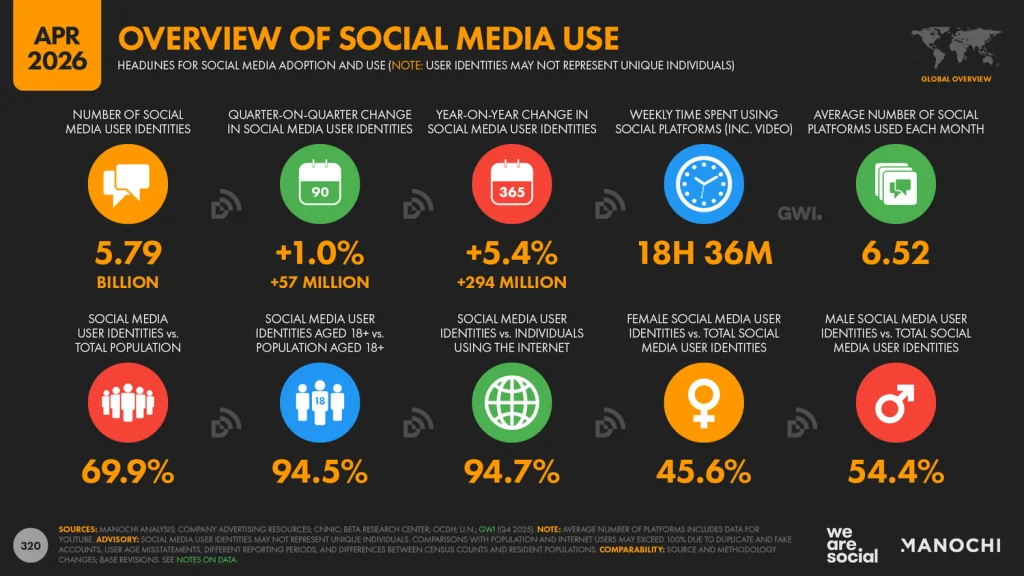
According to DataReportal, over 5.79 billion people use social media globally. The more optimized your social profile, the larger a share of these people it can reach.
Here’s how to ensure it does that:
Publish content that demonstrates your impact
Refresh your social profile to reflect what you’ve achieved so far and your goals.
- Stories showing how your work has affected individuals or communities, shared with appropriate consent
- Recent and milestone photos, videos, and educational information related to your cause
- Most relevant volunteer experiences, fundraising announcements, and upcoming events
Every update you share builds transparency and helps people trust you. Each update also motivates them to volunteer, sponsor, or share more widely.
Maintain consistent branding and engagement
Your website, social media pages, and every communication source all work together to achieve the same goal: create awareness, attract donors and volunteers, and reach more beneficiaries.
So, keep the messaging consistent across all of them. Your design themes on the website and on social media must also align. This makes it easy for people to recognize your organization anywhere.
You should likewise engage with followers through comments and messages. Let them know there’s a real person behind the account handles.
Listen to understand your audience
You can use tools like Brandwatch or Sprout to monitor comments, mentions, questions, and conversations around relevant topics. Pay attention to what people say about your organization, the causes you support, and the issues affecting your beneficiaries.
These insights can help you understand what your audience cares about, identify concerns that need addressing, and spot opportunities for new campaigns or content. They can also help you respond to questions and feedback before they become larger issues.
- Grow relationships through relevant online communities
You are most likely already in places where people with similar interests, experiences, or goals come together to ask questions, share ideas, and discuss issues they care about. You can use these communities to create awareness about your cause and connect with people who may benefit from or support your work.
Here’s where to start:
Develop communities around your mission
For example, if your nonprofit focuses on environmental conservation, find more groups where members discuss environmental issues, share useful resources, and work on ongoing projects.
You can also create one if you haven’t. It becomes a channel where you can share updates about your organization and invite other nonprofit organizations with similar goals. Share the access or invitation on social media, and review access to ensure participants will add to the community.
Share useful information and answer questions
For the communities you’re already in, answer relevant questions, share helpful resources, and contribute to discussions around your cause.
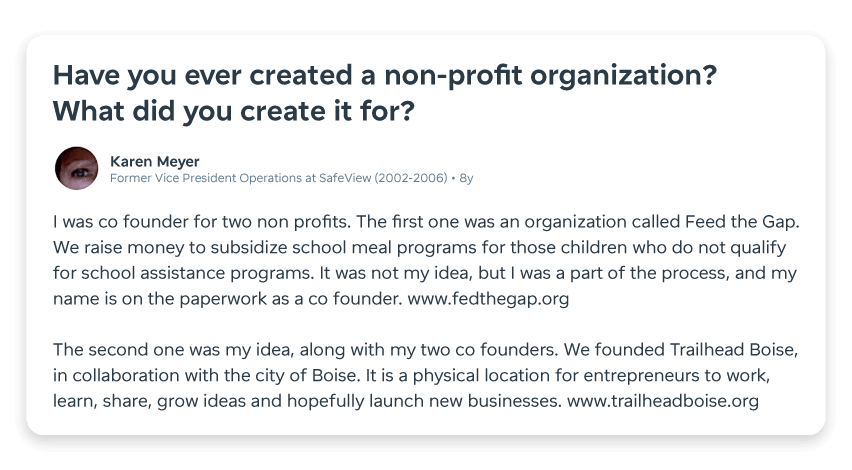
Take Karen Meyer, the co-founder of FedTheGap, an organization that helps subsidize school meal programs in the US, as an example. She joined a Quora discussion about people’s experiences creating a nonprofit and, in a way, pitched what her org does.
This helps people recognize your organization as a credible source of information. As they become more familiar with your work, they may visit your website, follow your social media accounts, volunteer, or support your programs.
To be effective, you can create a team directly responsible for engagement on these forums. They create the responses, look for relevant conversations and join in, or start a new discussion.
- Increase participation in podcasts and virtual events
It may seem unconventional, but you can reach new audiences by participating in podcasts, interviews, webinars, and other virtual events.
Host webinars and virtual workshops
Organize online sessions where people can learn about your organization’s mission, ask questions, and get useful information. For example, a nonprofit focused on maternal health can host a webinar on pregnancy care and emergency aid, while an organization working on environmental protection can organize a workshop on waste management.
These events help you educate your audience and introduce more people to your organization.
Appear on relevant podcasts and in interviews
Look for podcasts, online interviews, livestreams, and other media platforms that discuss topics related to your nonprofit’s work. Your founder, program director, or subject matter expert can explain the problem you’re addressing, share lessons from your projects, and discuss how people can get involved.
This gives you access to audiences who may not have discovered your organization through search engines or social media.
Collaborate with other organizations and experts
You can also partner with other nonprofits, industry experts, and community leaders to host virtual events or participate in panel discussions. These collaborations help you reach their audiences and build relationships with people interested in your cause.
Don’t let your content disappear once an event ends. Record your webinars and, where you have permission, turn key discussions into short videos, social media posts, articles, or email newsletter content.
- Enhance donor relationships across digital channels
Getting people to discover your nonprofit is only part of the work. The other task is to scale relationships with those who discover you online.
To do that:
Personalize email communication with supporters
Your donors, volunteers, and corporate partners have different interests, so your emails should reflect that.
Segment your mailing list by donation history, past interactions, and the programs supporters care about.
For example, someone who regularly donates to your education program may appreciate updates about student progress and new projects. A corporate partner may be more interested in impact reports and partnership opportunities.
Use these insights to send relevant newsletters, fundraising announcements, and follow-up messages.
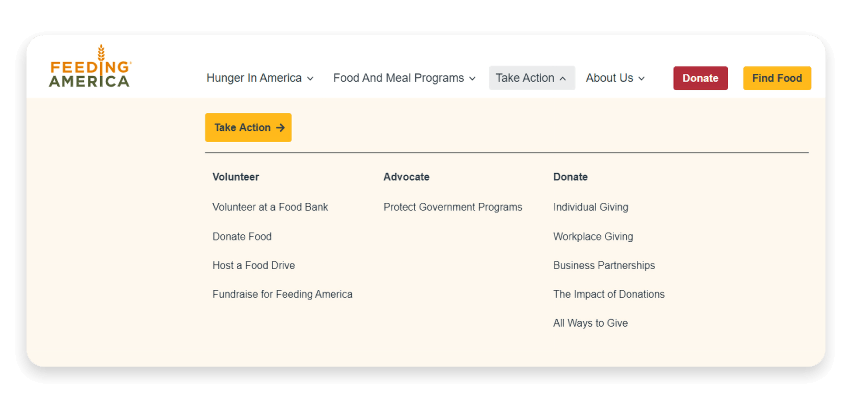
Connect donor data with a nonprofit CRM
Your nonprofit receives donations and support through several channels, including your website, fundraising events, email campaigns, and corporate partnerships. That’s too many records to be reconciled manually.
You need a nonprofit CRM (customer relationship management) platform in this case. It organizes donor profiles, tracks contributions, and records past interactions.
You can use this information to identify recurring donors, understand giving patterns, and personalize fundraising appeals. The same data also helps you identify supporters whose engagement has declined so you can follow up with relevant updates or campaigns.
This makes it easier to manage donor relationships, encourage repeat contributions, and improve long-term donor retention.
Acknowledge donations and measure engagement metrics
When someone donates to your organization, acknowledge their contribution and keep them updated on your progress.
Finally, pay attention to how people engage with your emails and other communications. Track useful metrics, such as email opens, link clicks, event registrations, and donations, to understand what resonates with your audience.
Also protect the personal information you collect and handle donor records securely. Building relationships requires trust, and how you manage people’s information is part of that.
Strengthen your nonprofit organization’s professional presence online
Actively getting seen online is crucial for your nonprofit organization. This helps you attract donors, partners, volunteers, and even the beneficiaries you’re trying to reach.
Start by optimizing your website, updating its content, and ensuring it’s secure. Use social media to share relevant updates, engage with your audience, and understand what matters to them.
You can also expand your reach through online communities, podcasts, and virtual events. Finally, personalize your communications and connect donor data through a nonprofit CRM to manage relationships and encourage continued support.
To give your nonprofit a fast, secure, and reliable home online, check out Namecheap’s affordable web hosting plans.
Frequently asked questions
How can a nonprofit improve its online presence on a small budget?
Start with the basics that cost little or nothing: keep your website up to date, complete your free social media profiles, claim your Google Business Profile, and join relevant online communities. Affordable web hosting and a domain name that matches your organization’s name give you a professional foundation without stretching your budget.
How often should a nonprofit update its website and social media?
Review key pages, such as your programs, contact details, and donation information, at least once a quarter, and update them whenever something changes. On social media, post consistently, even if it’s only a few times a week, so supporters can see your organization is active.
What domain should a nonprofit use for its website?
Many nonprofits choose a .org domain because people associate it with mission-driven organizations, but a .com or local country domain can work just as well. Whichever you pick, choose a short, easy-to-spell domain name that matches your organization’s name.