

How five women founders turned ideas into action
Many people who think about starting a business never actually launch one. Usually, it isn’t because the idea itself is bad. Instead, they get stuck thinking they’re not ready and never take the next step.
For the past six years, Namecheap’s International Women’s Day initiative, #WomenPoweredbyNamecheap, has supported women entrepreneurs building businesses and bringing their ideas online, with 162 winners receiving sponsorship through the program. This year also marked the first time the initiative included a $1,000 grand prize in addition to a full year of domain and hosting support.
One thing we noticed while reviewing this year’s applications is that these women didn’t wait until they had everything figured out before getting started. Instead, they saw a problem worth solving, an opportunity worth pursuing, or a skill worth sharing with others, and then they took action.
We’re proud that the women we selected represent a wide range of industries and come from different parts of the world, including urban farming in Kenya, cultural tourism in Ghana, AI-powered documentary filmmaking in Germany, wearable art in Canada, and youth self-defense education in New Zealand.
Despite their differences, their stories will feel familiar to anyone trying to build something from scratch.
Seeing a problem others accept as normal
For grand prize winner Winny Okoth of Citified Farms, the starting point was watching urbanization reshape the landscape around her.

“As an urban resident who previously lived in an agricultural town, the impact that urbanization has had on food security has been significant,” she explained. “Due to the increasing population, infrastructure is replacing farmlands at a high rate. In Kiambu, where I stay, we have lost 50% of farmland to infrastructure in just 20 years.”
Rather than treating that shift as inevitable, Citified Farms developed vertical hydroponic tower gardens designed to help small-scale farmers and urban gardeners grow significantly more food in compact spaces while using less water.
“We are looking to create a solution that will allow urban areas to thrive without effective food security,” Okoth wrote. “Our solution allows families to grow more food in their balconies, backyards, and rooftops by maximizing vertical space.”
The business focuses not only on sustainability but also on accessibility. By using locally available materials, the company aims to reduce barriers to entry and make urban farming more realistic for everyday households.
That same “why does this have to stay this way?” mindset appears in the work of winner Eva Kulkarni, founder of KickStartYouth in New Zealand.

KickStartYouth provides free self-defense workshops to primary school students across Auckland, combining martial arts techniques with lessons about resilience, confidence, and personal safety.
Kulkarni explained that the idea grew out of her own childhood struggles with anxiety and the confidence she eventually developed through karate. But the moment the initiative became something she felt committed to growing came once she began teaching.
“I initially started KickStartYouth because I knew how much martial arts helped me build confidence, but the moment I realised it was worth pursuing was when I began teaching and saw the kids who were turning up,” she said. “Some came to class with visible signs of hardship, whether that was a lack of confidence, fear, or even physical injuries.”
“At that point, it stopped being just an idea and became something I felt responsible to continue and grow,” she added. “Self-defence is a right, not a privilege.”
Both businesses are very different, but they share an important entrepreneurial trait: they started with a problem the founders could no longer ignore.
Realizing your perspective has value
Not every business begins with solving a large structural problem. Sometimes it begins with realizing your experience or perspective might help make a difference for other people.
That was part of the journey for Rabiatu Abdul-Aziz, founder of HerGuided Tours & Cultural Experiences in Ghana, and a winner of one of our full sponsorships.
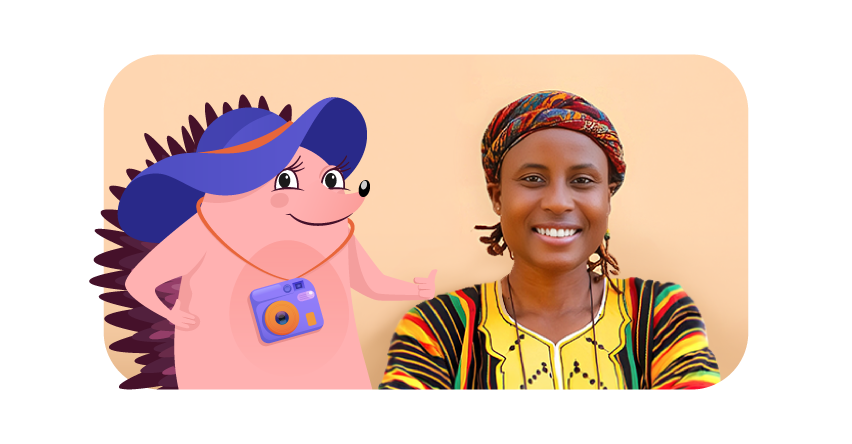
Although Abdul-Aziz is of Northern Ghanaian descent, she explained that she grew up in southern Ghana surrounded by stereotypes about the region and its people. It wasn’t until she relocated to Northern Ghana and experienced the culture firsthand that her perspective shifted.
That experience eventually became the foundation for HerGuided Tours, a social enterprise focused on immersive cultural tourism experiences that also support women-led businesses, artisans, cooks, and storytellers in the region.
“The moment I truly realized this idea was worth pursuing was when I saw how deeply visitors connected with the experiences we curated, not just as tourists, but as participants in real cultural life,” Abdul-Aziz said.
“At the same time, I saw the impact on the women we work with, artisans, shea butter producers, cooks, and storytellers, whose skills and stories are often overlooked.” She added, “It became clear that this wasn’t just a business idea, but a platform for visibility, dignity, and economic empowerment.”
A similar realization appears in the story of Canadian artist Sophie Bonifaz, whose Headpiece Rentals business focuses on handmade headpieces and crowns rented to performers, photographers, and creators, and whose story also led to her winning a full sponsorship from Namecheap.
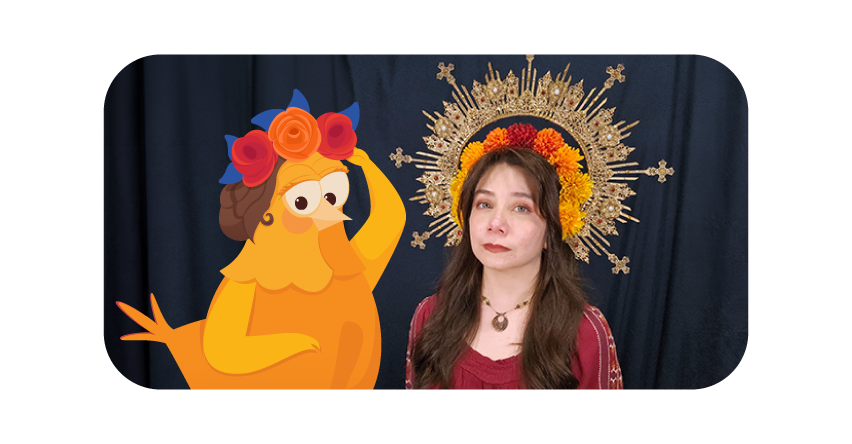
Bonifaz’s business model prioritizes sustainability by encouraging rentals instead of one-time purchases. The same pieces can be reused repeatedly, repaired when damaged, and made accessible to people who may not want or need to purchase expensive wearable art outright.
But before launching, Bonifaz questioned whether there was room for her in such a niche market. “I have received compliments on my headpieces and crowns for years, but was never sure if I could make a business from this passion,” she said. “I knew others had found success in this niche, but could I?”
What changed was hearing encouragement locally and seeing examples of other founders who had taken similar leaps.
“Speaking to others locally made me see the value in being one of the few in the region who made such things,” she explained. “I got an email about this opportunity soon after, and reading through past winners’ interviews gave me the confidence to apply.”
Building before you feel fully ready
Online, entrepreneurship is often presented as a polished process driven by certainty and long-term planning. Several winners described something much less tidy.
Sponsorship winner Giulia Maniezzo, founder of Germany-based DocuFusion.ai, built her business after years working in television production and experimenting with AI-assisted documentary filmmaking.

Before launching DocuFusion.ai, Maniezzo noticed that many documentary production companies were either ignoring AI entirely or experimenting with whatever new tool appeared next. After spending months testing AI tools while producing her own hybrid documentaries, she created DocuFusion.ai to help production teams identify which tools actually fit their workflows.
Like many of this year’s winners, she didn’t wait for ideal circumstances before getting started. “I’m a mother of three (my youngest is seven months old), building this in roughly two hours a day, usually after bedtime,” she explained. That reality shaped the business itself, leading her to create a focused audit process designed to deliver practical results quickly.
Finding confidence along the way
Several of this year’s winners spoke candidly about the challenges of building an online presence. Maniezzo admitted that consistency on social media didn’t come naturally. “I overthink everything, and I’m never fully convinced by what I’m about to publish. I’m still in the cringe phase, honestly.”
She wasn’t alone. Bonifaz described frustrations with social media algorithms and concerns about intellectual property theft. Abdul-Aziz discussed the difficulty of translating deeply human cultural experiences into a digital format. Kulkarni recalled how challenging it was to establish credibility before the first school agreed to work with KickStartYouth.
Reading through these applications, one thing became clear: none of these founders got started because they felt completely confident about the outcome. They moved forward despite uncertainty, learning and adapting as they went.
The importance of the first yes
One recurring theme across nearly all of the winners’ stories is the importance of early validation.
For Kulkarni, everything changed once the first school agreed to participate. “Everything changed when the first school said yes,” she said. “That gave me the chance to run sessions, take photos, gather feedback, and build a reference point that made it much easier to approach other schools with credibility.”
For Okoth, winning reinforced that Citified Farms was making a difference. “First and foremost, winning has given us the validation and recognition we needed as a young startup,” she explained. “We are more assured that our work is creating real impact in the community.”
And for Bonifaz, simply seeing stories from previous winners helped shift her mindset. “Despite working in a variety of industries, I could see the common thread: they all had the passion and resolve to make it, and took every opportunity they could to further their dreams,” she said. “Why not try, too? What’s the worst that could happen?”
This year’s winners come from different countries, industries, and backgrounds, but their stories point to a common truth: most businesses don’t begin when everything is perfectly planned. They begin when someone decides an idea is worth pursuing.
That may be the strongest takeaway from this year’s winners. Whether inspired by a problem, an opportunity, or a skill they nearly dismissed as “just a hobby,” each of these founders took action before they had everything figured out.
Sometimes the hardest part isn’t coming up with a good idea. It’s about deciding what to do with it.





Very good post Jackie! More of this please.