Building a fashion brand without traditional retail
For decades, the fashion world was defined by closed doors and gatekeepers. Department store buyers, fashion week curators, and editors of glossy magazines were keyholders. For independent designers, breaking into the industry often meant years of compromise: navigating traditional retail contracts, chasing wholesale deals, or waiting for a “big break.”
But today, the rules have changed.
Independent designers are no longer waiting for permission. They’re building brands on their terms, online, directly with customers, and often while they’re still in school or holding a full-time job. Armed with digital tools, direct-to-consumer (DTC) models, and growing consumer demand for authenticity, a new wave of fashion entrepreneurs is proving that success doesn’t require a storefront on Fifth Avenue.
Now, it takes strategy, creativity, and a strong digital identity.
This blog dives deep into how emerging designers can bypass traditional retail models and build profitable, sustainable brands in the digital-first era of fashion. From branding and storytelling to e-commerce platforms and ethical manufacturing, we’ll explore how to transform sketches into a viable business, and why domain identity plays a powerful role in building early credibility.
The decline of traditional retail and the rise of the independent designer
Let’s start with the industry shift.
The fashion retail landscape has been in flux for years. Department stores are closing, wholesale margins are shrinking, and the “middleman” model is losing relevance. In 2020 alone, over 25 major U.S. retailers filed for bankruptcy, and the pandemic only accelerated the shift in consumer spending toward online shopping.
But this disruption created an opportunity.
Direct-to-consumer fashion brands, built entirely online, saw exponential growth. Labels like Reformation, Pangaia, and Telfar became household names without relying on traditional retail pipelines. Instead of compromising with distributors, they owned the narrative, the margins, and the customer relationship.
For independent designers, this shift is a signal: you don’t need to be “discovered” by an industry insider. You need to be seen by the right audience, and digital platforms make that possible.
Building a digital-first fashion brand
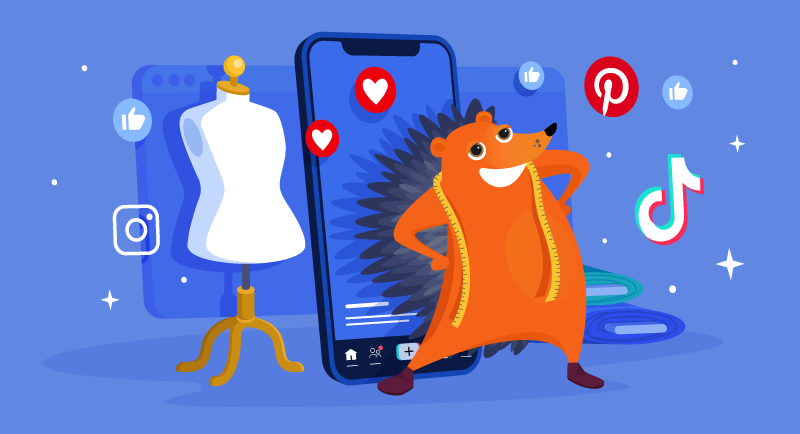
Fashion is still about expression, but in a digital-first world, presentation is everything. Your website is your flagship store. Your Instagram is your visual merchandising. Your TikTok is your front-row seat.
But good design alone won’t build a brand. Here’s what will:
- A clear brand story: What do you stand for? Whether it’s sustainability, slow fashion, cultural roots, or tech-forward design, your “why” has to be clear and visible in every interaction.
- Professional, clean visual identity: You don’t need to be a graphic designer, but consistency matters. From your logo to your lookbook, ensure your aesthetic is cohesive and aligns with your brand values.
- A dedicated website (with a strong domain): Social platforms can drive discovery, but your website is where conversions and credibility happen. A relevant domain like .CFD (Clothing, Fashion, Design) signals what you do at first glance. It tells collaborators, customers, and media you’re not just another account, you’re a brand.
- Content that connects: Behind-the-scenes videos, design sketches, and candid stories build trust and deepen audience connection. Show your process, not just your products.
- SEO and searchability: Many new designers focus solely on social media, forgetting that thousands of potential buyers, stylists, and editors search Google every day. A well-structured website with search-friendly terms (like “sustainable fashion in NYC” or “made-to-order eveningwear”) helps you get found beyond the algorithm.
Sustainability isn’t a trend, it’s a business model
One of the most powerful advantages independent designers have over legacy brands is flexibility and values.
Large brands struggle to keep pace with the growing demand for ethical and eco-conscious fashion. However, emerging designers can incorporate these principles into their operations from the outset.
Whether it’s using deadstock fabric, offering made-to-order pieces to reduce waste, or being transparent about sourcing, values-driven branding is now a competitive edge.
More than 70% of Gen Z consumers say sustainability influences their purchasing decisions. And independent designers are uniquely positioned to meet those expectations.
Building a sustainable business model doesn’t mean sacrificing profitability. It means building long-term loyalty with like-minded customers who appreciate your values as much as your designs.

From Shopify to TikTok Shop: Rethinking the fashion sales funnel
Today’s fashion entrepreneur has more tools at their fingertips than ever before.
Platforms like:
- Shopify: Ideal for building a customizable and scalable online store.
- Etsy: Perfect for small-batch or handmade items and for reaching a built-in audience.
- Instagram Shopping and TikTok Shop: Ideal for connecting directly with younger consumers who browse with their thumbs and make impulse purchases.
- Pinterest: Underrated but powerful for long-term visual discovery, especially for fashion.
But here’s the key: don’t chase every platform.
Instead, map out a realistic, intentional strategy:
- Start with one or two core platforms aligned with your audience.
- Optimize your content and call-to-actions for conversion.
- Use analytics to refine what’s working.
And always bring customers back to your own site. That’s where you own the data, the narrative, and the full brand experience.
Emerging designers doing it right
- Hanifa: A Black-owned fashion label that made headlines with its 3D virtual runway show. By leaning into technology and direct storytelling, it bypassed traditional fashion week altogether and went viral on its own terms.
- Berriez: A vintage resale brand started on Instagram that evolved into a full-fledged label. Its bold aesthetic and size-inclusive ethos helped build a cult following without big media coverage.
- LUAR: A Brooklyn-based brand whose founder, Raul Lopez, launched an ultra-specific point of view rooted in his Dominican-American identity. His direct-to-audience approach helped LUAR rise to prominence outside of traditional runway circuits.
Each of these brands utilized digital tools not only for visibility but also to control their own narrative. That’s the new fashion playbook.
Why domain identity still matters in 2025
In a social-first era, it may be tempting to think that websites are outdated. But the opposite is true.
Your website is your digital flagship. It shows professionalism, offers creative control, and consolidates your brand story in one place.
A strong domain name:
- Makes you more searchable.
- Increases brand memorability.
- Tells people what you do before they click.
Domains like .CFD (Clothing, Fashion, Design) help independent designers to stand out instantly. Whether it’s iris.cfd or studios.cfd, a domain that speaks the language of your industry is more than a URL. It’s a positioning statement.
Especially when traditional press, stylists, or buyers search for new talent, a sharp, relevant domain signals that you take your brand seriously.
From designer to entrepreneur
Becoming a successful fashion designer in 2025 isn’t just about creativity. It’s about ownership.
- Ownership of your narrative.
- Ownership of your audience.
- Ownership of your brand’s identity in a digital world.
That doesn’t mean giving up artistic vision for marketing plans. It means understanding that in a world full of noise, clarity wins.
- You don’t need a showroom in Paris.
- You don’t need a Vogue feature to go viral.
- You don’t even need thousands of followers to be profitable.
What you need is a clear message, a professional presence, and the confidence to build on your terms.
And that starts with your brand’s home, online.
So whether you’re showcasing your portfolio, launching your first collection, or starting a digital fashion label, make sure your brand doesn’t just look good but that it lives well too.
In the new fashion economy, the runway begins with a click. And if you want to up the chance of users clicking on you, well, you’ll need the right domain. Search for the perfect fashion-fit address, then register your pick in minutes.
Plus, if your site needs building or your brand needs a boost, then check our marketing kits, graphic tools, and site builders too.