AI vs. copyright: Who actually owns the code now?
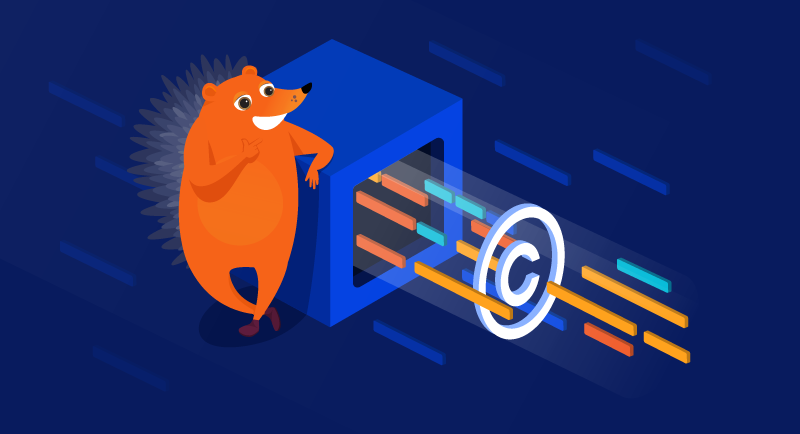
Ownership used to be simple in software. You wrote the code, you owned it. Then AI arrived. Somewhere between the lawyers, the lawsuits, and the GitHub repositories, that certainty collapsed. An AI model can now produce thousands of lines of working code in seconds, drawing on patterns and logic shaped by decades of open-source labor.
But when that code compiles and ships, who owns it? The developer who prompted it? The company that trained the model? Or the thousands of anonymous contributors whose commits are part of its digital DNA?
Every answer seems wrong — and every court ruling makes it murkier. What started as an innovation race has become a legal cage match, where creativity, ethics, and copyright collide at machine speed.
The ghost in the GitHub machine
AI coding assistants like Copilot and ChatGPT have changed how developers write, debug, and deploy. They’re not just tools, but collaborators trained on billions of lines of code scraped from public repositories.
That’s where the tension starts. Most open-source licenses allow reuse, but not always in the ways AI companies have used them. When a model regurgitates code verbatim from a repository under a restrictive license, it’s no longer inspiration, but reproduction.
This gray area has triggered a wave of lawsuits from developers who claim their work is being “laundered” through AI systems. The models, they argue, didn’t learn — they memorized. And now, they’re outputting derivative works without consent or attribution.
On the other hand, AI companies insist that their models perform a form of statistical remixing protected under fair use. The result is a philosophical stalemate disguised as a copyright debate.
For developers, it’s less about ideology and more about trust. The open-source community was built on transparency and reciprocity. If AI can’t — or won’t — honor those principles, it risks eroding the very ecosystem that made its existence possible.
Fair use or unfair advantage?
The “fair use” argument might sound clear on paper, but it’s being stretched to breaking point in courtrooms. Traditionally, fair use allowed creators to build upon existing work in limited, transformative ways. But when a neural network processes terabytes of source code, what counts as transformation? The models don’t reference, quote, or parody — they internalize. And once that knowledge becomes part of the AI’s weights and biases, it’s nearly impossible to isolate where a specific snippet came from.
Developers suing OpenAI and Microsoft argue that this is more akin to mass ingestion than fair use. Meanwhile, courts are struggling to apply analog laws to digital intelligence. Judges must decide whether training data represents “reading” or “copying,” two concepts that were once distinct but now blur in silicon logic.
The stakes are enormous: a ruling against fair use could redefine how every AI company trains its models.
The irony is that both sides believe they’re defending creativity. Developers want their contributions respected. AI companies argue they’re unlocking new creative potential. The reality is, however, that most of us are in the middle.
Marketers rely on AI ads and AI-generated content, but they’ve learned quickly that the copyright bear is not to be poked. Not everyone can afford to have a legal kerfuffle with the NYT, as OpenAI did, and Perplexity is experiencing right now.
The open-source paradox
Open source was supposed to make software free and fair. Anyone could build on existing code as long as they followed the licensing rules. But AI has twisted that philosophy into something unrecognizable.
Training a model on open repositories technically respects accessibility, but not intent, and the EU agrees with this. These projects were meant to be shared by humans, not digested by algorithms.
Some developers have started deleting or relicensing their repositories to block AI training. Others are embracing the chaos, arguing that AI-generated code still contributes to the open-source cycle. The paradox is that both perspectives are right. Open source thrives on reuse, yet it collapses if reuse becomes exploitation.
Platforms like GitHub find themselves stuck in the middle. Their value depends on open access, yet their partnerships with AI companies create ethical whiplash. As models become better at generating functional code, the need for attribution — or even human authorship — shrinks. That’s not a legal question. It’s a cultural one.
And culture moves slower than code.
The developer’s dilemma
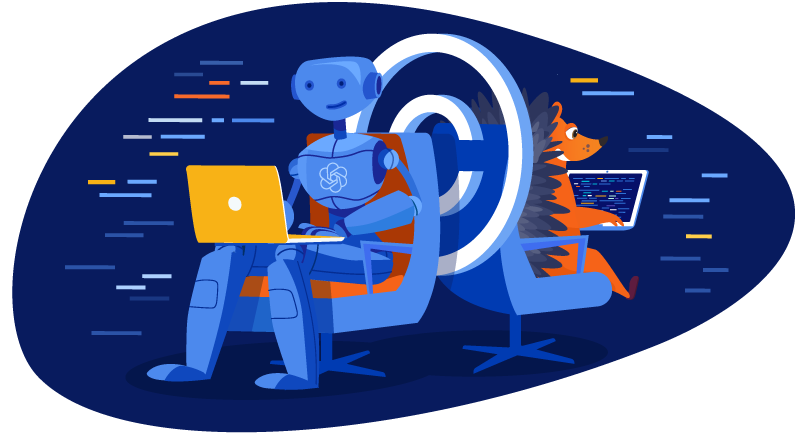
For individual developers, the AI copyright debate isn’t theoretical — it’s professional survival. According to Stack Overflow, 84% of devs are utilizing AI in their workflows, with varying degrees of implementation
The other 16% see them as creative plagiarism machines that threaten to replace their livelihoods. The reality lies somewhere in between: these tools are accelerators, but they’re also mirrors reflecting our collective codebase back at us.
The bigger dilemma is accountability. When AI-generated code causes a security flaw or licensing violation, who’s responsible? The model? The user? The company that trained it? So far, no one has an answer that satisfies both engineers and attorneys. Until they do, developers are stuck walking a tightrope between innovation and infringement.
Where the law goes from here
While the courts are playing catch-up, some experts predict the emergence of “AI authorship registries” or hybrid ownership frameworks that split credit between users and model creators. Others argue for a total rethinking of copyright itself, replacing ownership with contribution-based attribution.
Europe is already experimenting with stricter AI regulations, including data transparency mandates that could reshape how models are trained. But even these frameworks can’t anticipate the next leap in generative coding. Every update, every new dataset, and every improved model pushes the legal boundary a little further.
One thing is certain: the status quo can’t hold. Whether through court rulings, legislation, or developer revolt, the AI copyright dilemma will force a rewrite of what “intellectual property” means in the digital age. The only question left is who gets the pen.
What the fight over copyright means
The fight over AI and copyright isn’t about who wins in court — it’s about who defines creativity in the next era of computing. Code was once a purely human language, written by individuals and communities who shared a sense of authorship. Now, machines write fluently in that language, remixing decades of work without pause or memory.
The result is both thrilling and terrifying: a future where code has no clear origin, and ownership feels like an outdated concept. The law will eventually catch up, but until then, developers are writing in the dark — hoping their words, and their work, still belong to them.